Museum Edition
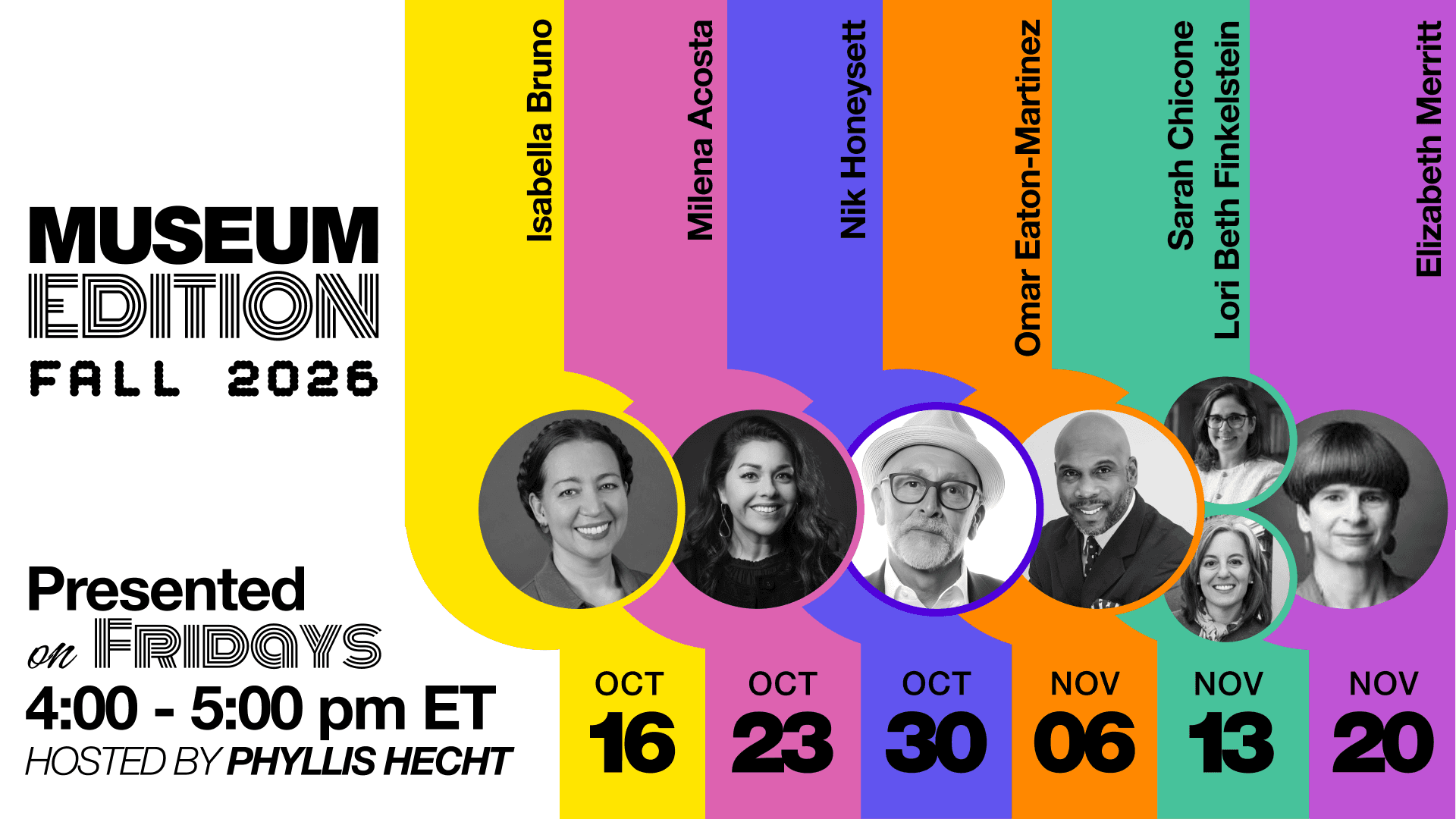
A six-part online series for museum and cultural heritage professionals, students, and anyone curious about how museums can respond to a changing world.
Hosted by: Phyllis Hecht
Fridays 4:00—5:00pm ET, Oct 16 through Nov 20
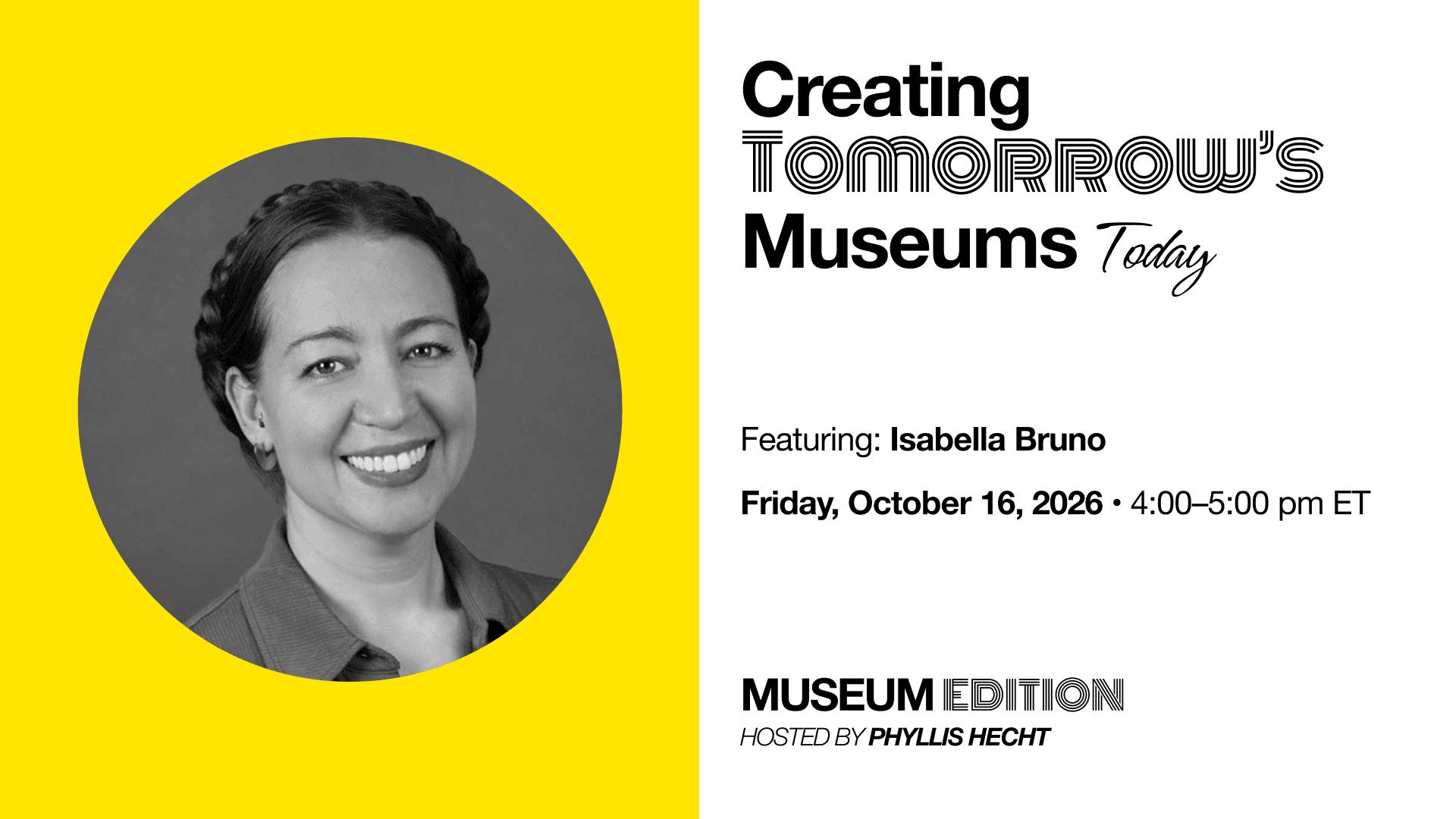
Isabella Bruno is the founder of the Lab for Radical Museum Futures, a laboratory for collective imagining that uses design fiction, experiential futures, playful experimentation, and conversation to radically reimagine museums. In this opening session, Bruno will introduce the Lab’s work and invite participants to consider how museums might better reflect just, liberated, and wondrous futures for ourselves and our descendants. The conversation will explore how speculative practice can help museum people move beyond reacting to immediate pressures, question assumptions about what museums are and who they serve, and begin creating the conditions for preferred futures in the present.
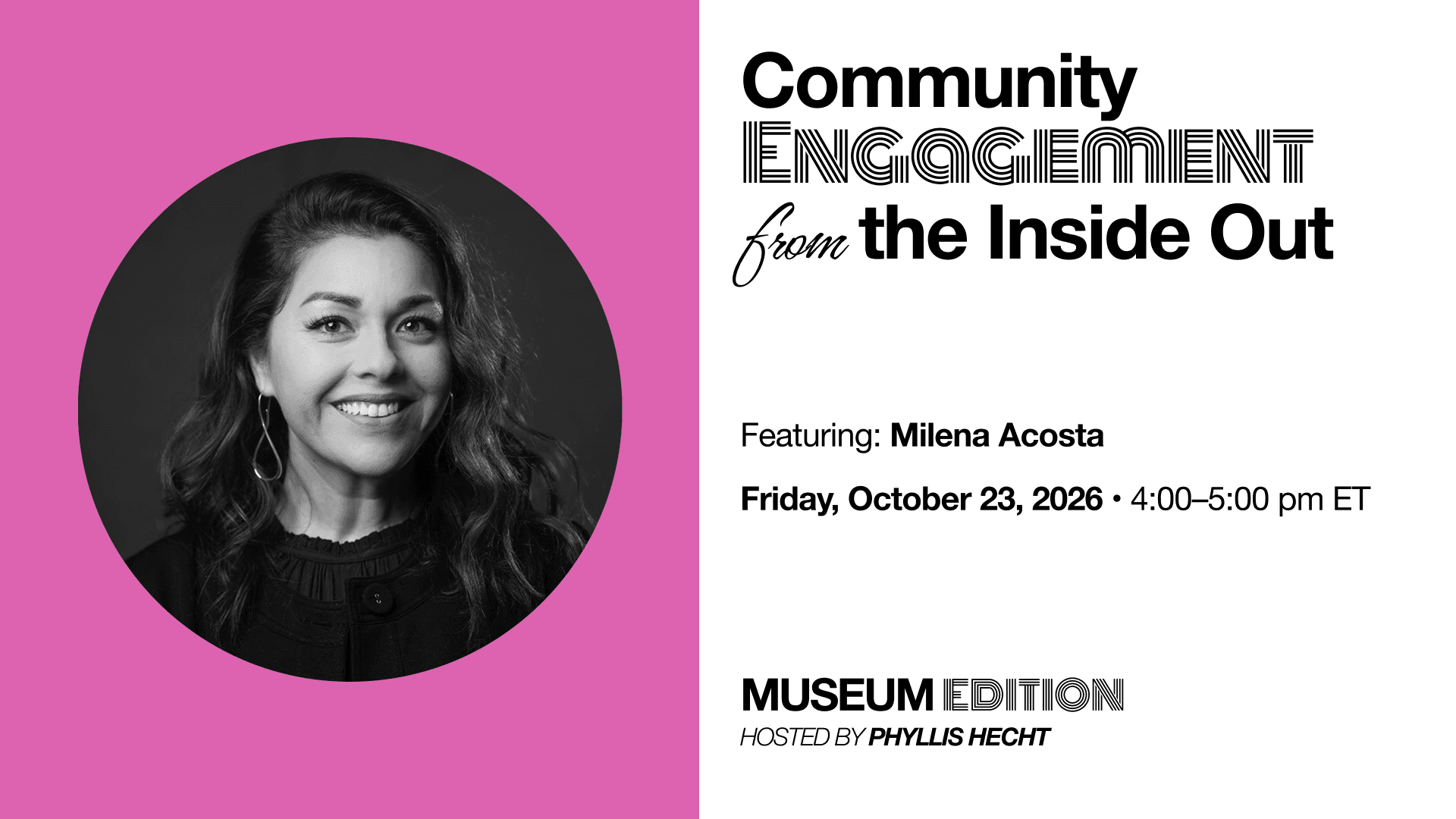
What does it take for museums to move beyond outreach and build relationships grounded in trust, reciprocity, and shared authority? Milena Acosta, Vice President of Audience Engagement at the Japanese American National Museum, draws on extensive experience in museum education and community engagement to explore how museums can engage, listen, and co-create with the communities they serve. The session examines how community knowledge can inform institutional decision-making, how museums can sustain relationships beyond individual projects, and how institutions can build the capacity and agency of staff across roles to recognize their own place in community engagement—even when their work is not traditionally public-facing. Together, these approaches offer a framework for translating institutional values into everyday practices that foster inclusion, belonging, shared ownership, and meaningful participation.
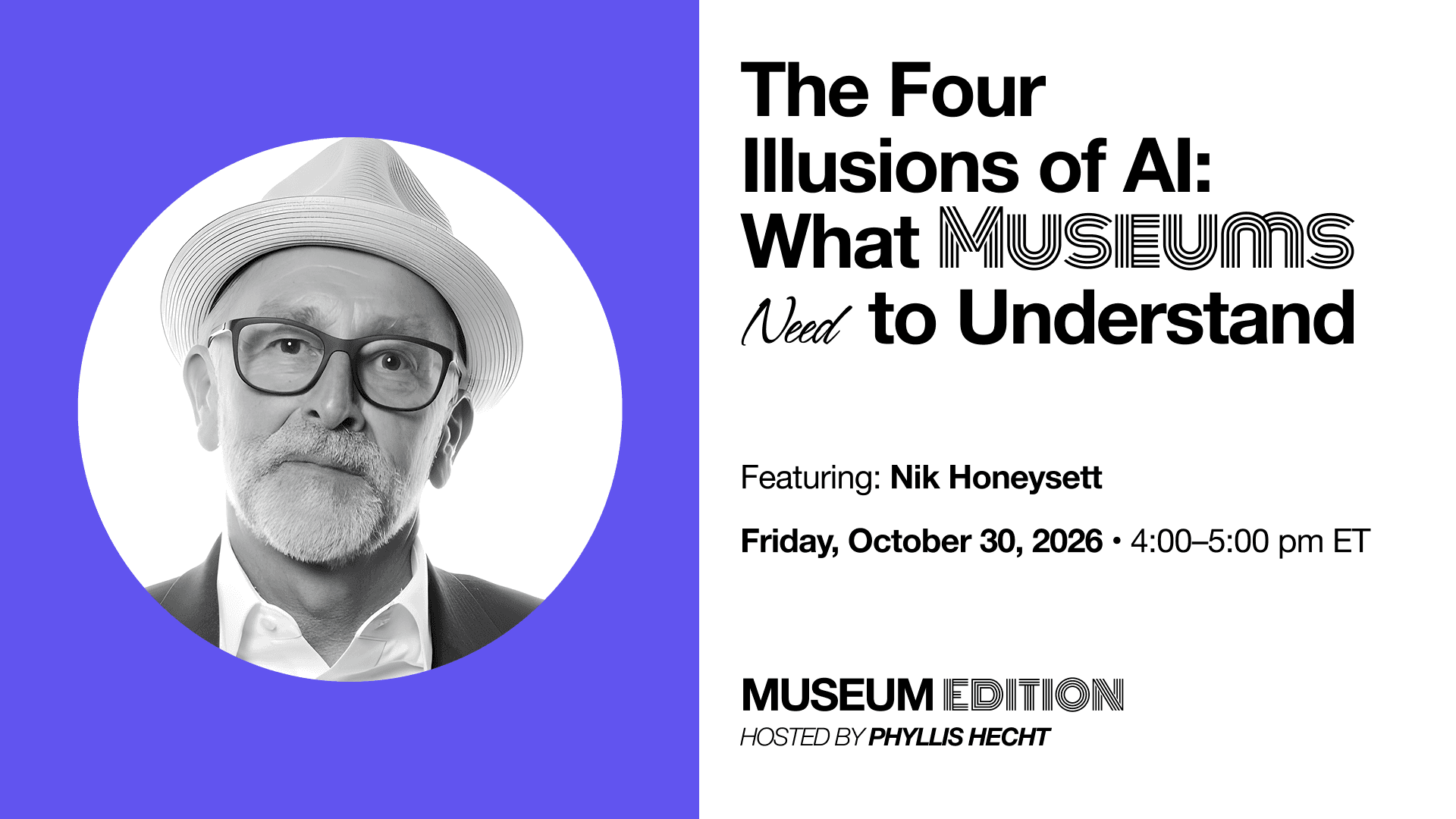
Nik Honeysett, CEO of Balboa Park Online Collaborative, offers a practical framework for understanding how artificial intelligence is changing the relationship between museums, their knowledge, and the public. Using four “illusions”: access, discoverability, certainty, and understanding, the session will examine what happens when museum content is interpreted by systems beyond institutional control. The conversation will move from diagnosis to action: provenance, transparency, human judgment, responsible governance, and the distinctive role museums can play in helping people turn abundant information into understanding and wisdom.
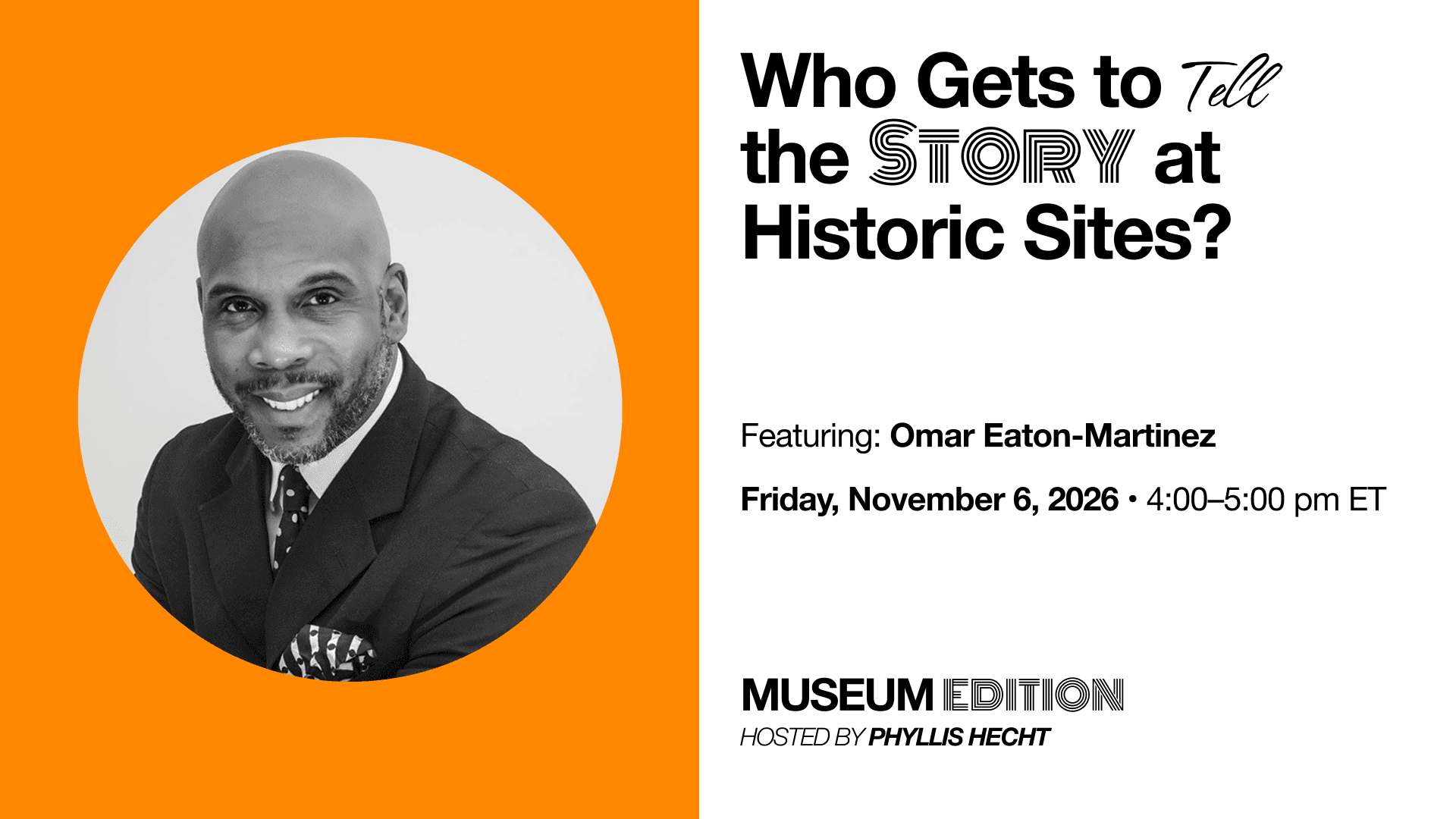
Omar Eaton-Martinez, Senior Vice President for Historic Sites at the National Trust for Historic Preservation, has worked to make historic sites more relevant, equitable, and accountable to the communities whose stories they hold. At a moment when interpretation and institutional independence are under political pressure, this session asks who has the authority to tell difficult histories and what is lost when complexity is replaced by a single, comfortable narrative. The conversation will explore community partnership, justice-centered interpretation, public trust, and how historic sites can connect past and present while telling a fuller American story.
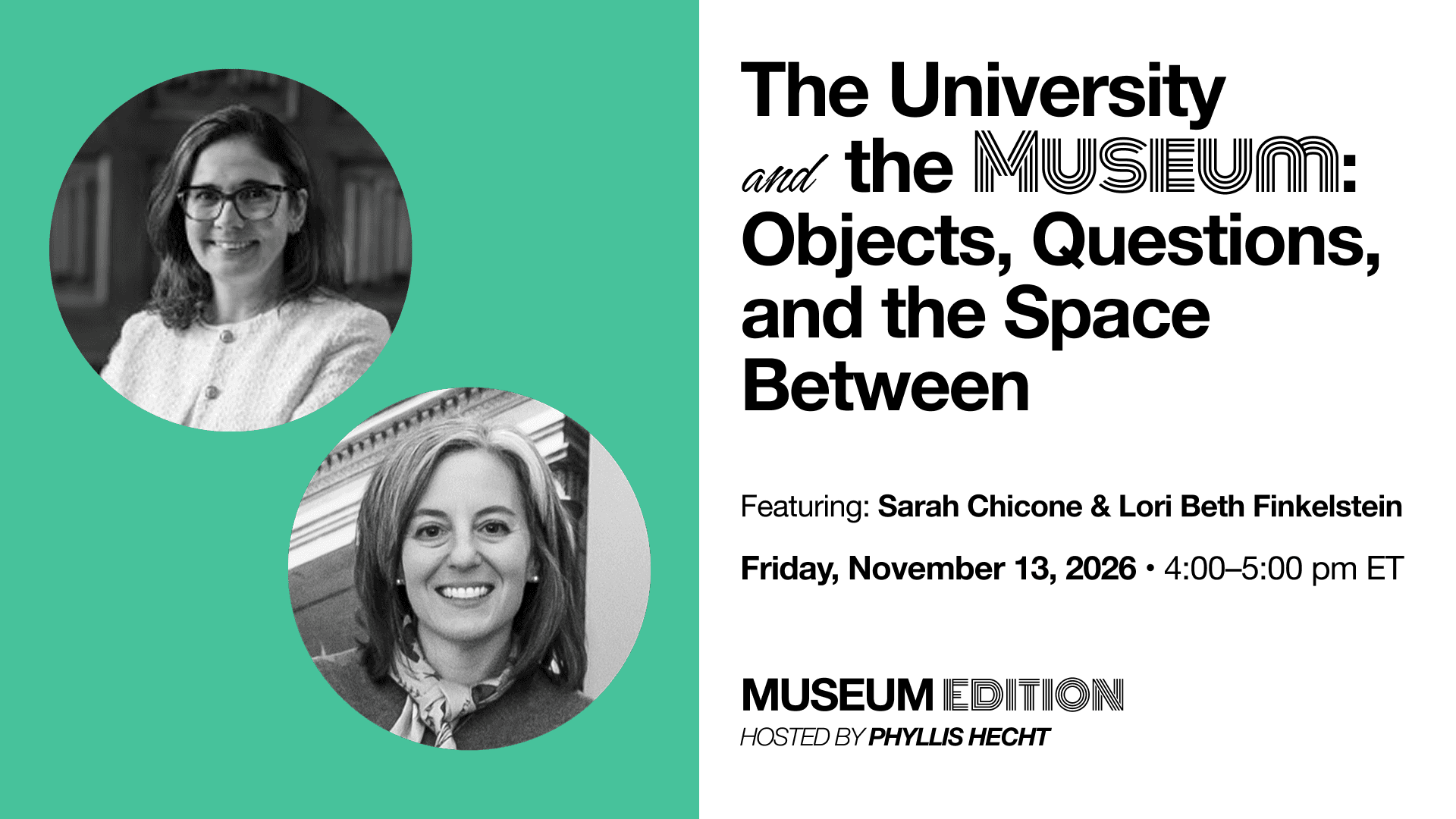
Sarah Chicone, director of Johns Hopkins University's graduate programs in Museum Studies and Cultural Heritage Management, and Lori Beth Finkelstein, director of JHU's Evergreen Museum & Library, and Homewood Museum both work at the intersection of museums and universities, institutions that, at their best, share a commitment to inquiry and research over instruction. Drawing on pedagogical tools, curatorial practice, and the distinct settings of university museums, they will explore how museums have long invited visitors not toward answers, but toward better questions: what is this object, how do we know what we know, and what do we still not know, and how knowing and learning makes us feel. In a moment when AI can produce instant answers, this practice, slow, embodied, uncertain, and human becomes newly visible for what it has always offered.
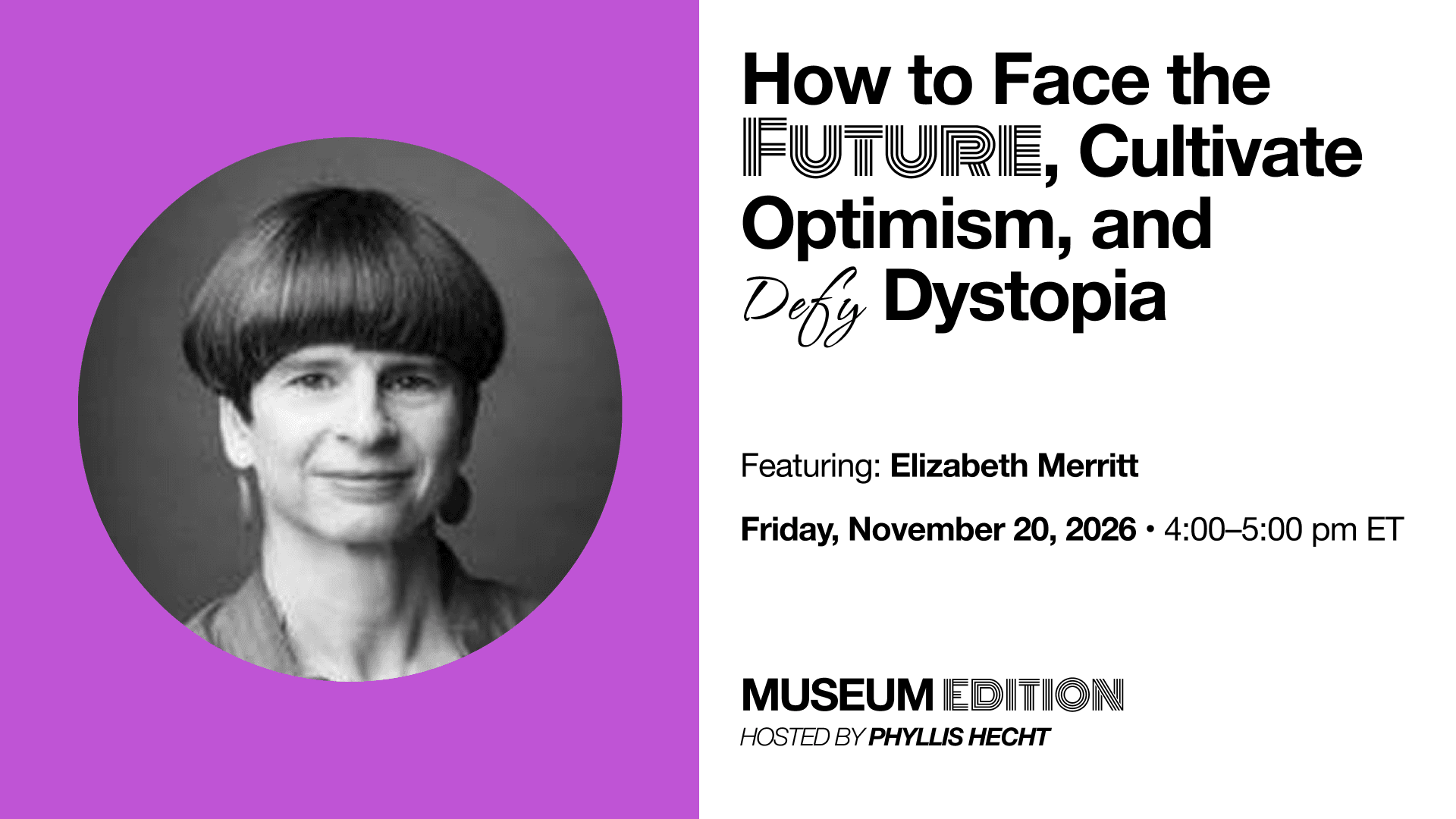
Elizabeth Merritt, Vice President for Strategic Foresight and founding director of the American Alliance of Museums’ Center for the Future of Museums, applies trends forecasting and scenario development to help museums create brighter futures for their communities. At a time when AI, culture wars, government actions, and economic stress can make the future seem unknowable, Merritt will show how foresight can restore a sense of agency. This closing session will explore how museum people can envision positive change, cultivate resilience, resist apathy, and identify plausible paths forward in difficult times.
ABOUT THE PARTICIPANTS
Phyllis Hecht is a recognized leader in museums, technology, and education, passionate about using digital innovation to build dynamic communities. A pioneer in museum technology, she helped shape the National Gallery of Art’s first website, transforming how audiences connect with art. As Founding Director of the Museum Studies M.A. program at Johns Hopkins University, she created an influential online learning community. Her work explores the interplay of emerging technologies and the power of storytelling in fostering inclusive creative communities. She currently serves as Director of Museum Initiatives for Zakros InterArts.
Isabella Bruno is the founder of the Lab for Radical Museum Futures, where she explores how museums can build the capacity to imagine and shape different futures. She specializes in community-based learning design and organizational change in cultural institutions. Previously, as Learning and Community Lead at the Smithsonian Institution’s Office of Digital and Innovation, she developed participatory approaches to professional learning and assessed their impact across museum settings. Her current work asks how museums can move beyond developing individual skills to strengthen their ability to adapt as institutions, with a particular focus on futures literacy.
Milena Acosta is Vice President of Audience Engagement at the Japanese American National Museum, where she oversees the Democracy Center, public programs, visitor services, and facility rentals. Previously, as Associate Director of Community Engagement at the Natural History Museums of Los Angeles County, she built partnerships with community organizations and helped develop programs shaped by community priorities. A marine biologist and science communicator, Milena brings 20 years of experience in learning beyond the classroom. Her work centers on listening, building trust, and creating lasting relationships between museums and the communities they serve.
Nik Honeysett is CEO of Balboa Park Online Collaborative and has spent 30 years working at the intersection of museums, technology, and strategy. Previously, he led administration and digital transformation at the J. Paul Getty Museum and directed the Getty’s Web Group. He began his career at CogApp, a software consultancy serving cultural institutions in Europe and the United States. Nik advises museums of all sizes on digital strategy, sustainability, and organizational change. A frequent speaker on technology in the cultural sector, he was co-principal investigator of the 2015 and 2016 Horizon Report: Museum Edition.
Omar Eaton-Martinez is Senior Vice President for Historic Sites at the National Trust for Historic Preservation, where he leads the stewardship and interpretation of 28 sites across the country. Previously, he directed historical resources in Prince George’s County, Maryland, including house museums, an aviation museum, archaeological parks, and the Black History Program. His experience also includes work with the Smithsonian, National Park Service, and NASA, as well as teaching in New York City and Washington, DC. Omar builds coalitions around more inclusive public history and serves on Maryland’s Lynching Truth and Reconciliation Commission.
Sarah J. Chicone is program director and a teaching professor for the MA in Cultural Heritage Management and MA in Museum Studies programs at Johns Hopkins University. She has more than 20 years of museum experience as a curator, exhibition developer, and designer, working across natural history, science, anthropology, contemporary art, and history. Her interests span cultural heritage, material culture, public archaeology, informal learning, and exhibition design. She is the author of a book on creating natural history exhibitions. At Johns Hopkins, Sarah teaches across both graduate programs and advises students preparing for careers in museums and heritage.
Lori Beth Finkelstein is the director of Johns Hopkins University’s Evergreen Museum & Library, and Homewood Museum. Previously, she led education, interpretation, and volunteer programs at the Maryland Zoo in Baltimore and served as Director of Education and Interpretation at the Baltimore Museum of Industry. She began her museum career as an educator and curator at the Museum of Early Trades and Crafts in New Jersey. Lori has also taught museum studies and public history at Johns Hopkins University, Stevenson University, and Seton Hall University.
Elizabeth Merritt is Vice President, Strategic Foresight, and Founding Director of the Center for the Future of Museums (CFM) at the American Alliance of Museums. She uses trends forecasting and scenario planning to help museums prepare for change and create stronger futures for their communities. Elizabeth shares this work through publications, social media, and presentations in the United States and abroad. She is author of The AAM Guide to Collections Planning, National Standards and Best Practices for US Museums, and CFM’s annual TrendsWatch report. Before joining the Alliance, she held various positions in museums collections management, research, and administration.